Context & Problem
Pricing managers and analysts relied heavily on static dashboards. Detecting anomalies meant manual checks, often too late to prevent financial impact.
Pain points:
- Delayed detection: Issues surfaced only after dashboards were refreshed.
- Manual effort: Analysts had to constantly monitor and interpret data.
- Lost opportunities: By the time problems were flagged, corrective actions lagged behind.
Goals
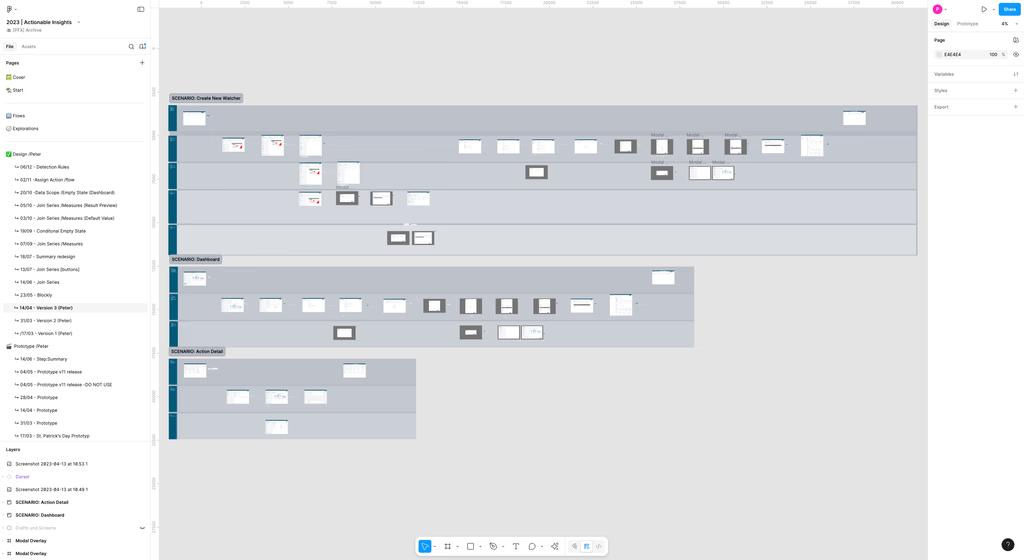
- Self-service: Let non-technical users create and manage alerts without engineering support.
- Boost efficiency: Reduce reliance on analysts by streamlining anomaly detection.
- Proactive insights: Surface issues in real time before they escalate.
- Governance: Ensure actions and workflows remain consistent with organizational policies.
Hypothesis: By enabling self-service alerting and guided actions, users will resolve issues faster and with greater confidence, cutting the time from detection to resolution by up to 40%.
Process
1. Research
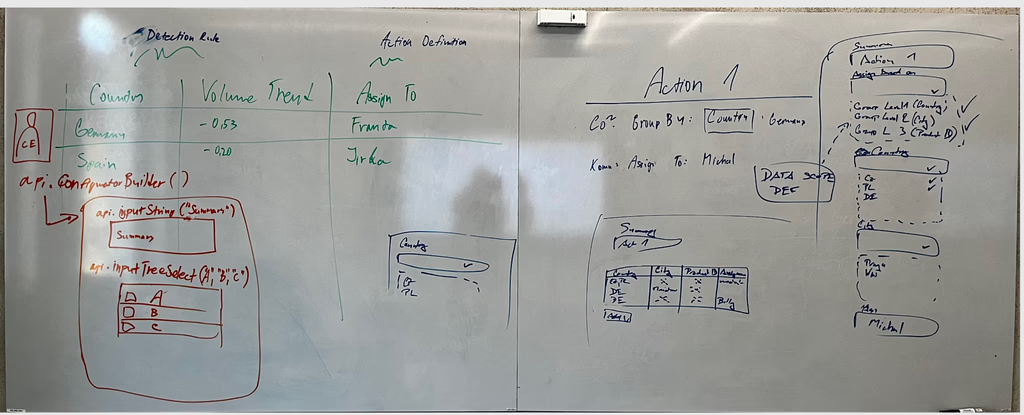
- Conducted discovery sessions with pricing managers and business analysts.
- Learned that users wanted proactive notifications instead of static monitoring.
- Identified a tension: power users wanted flexibility, while non-technical users needed simplicity.
2. Ideation & Design
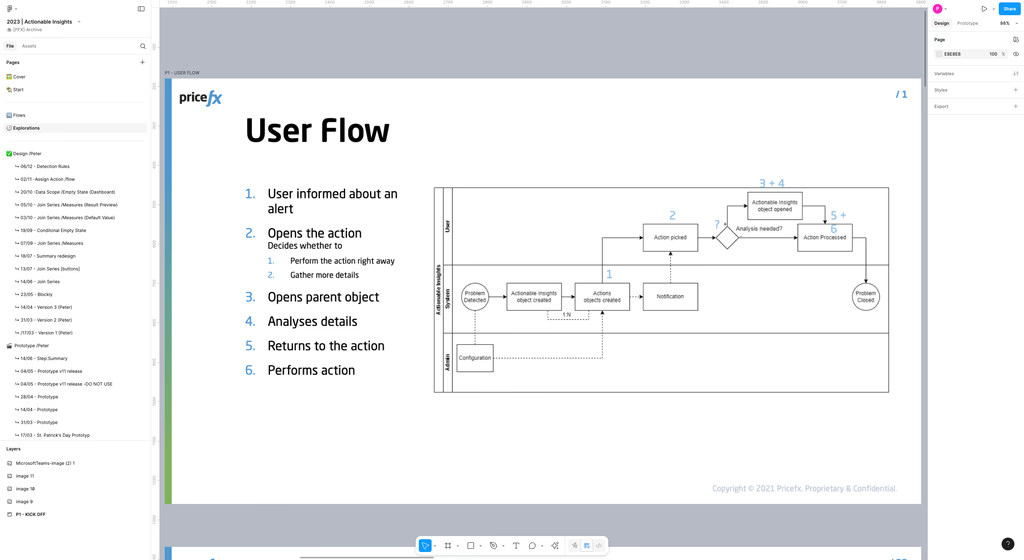
- Balanced advanced capabilities (joins, series detection) with clear no-code interfaces.
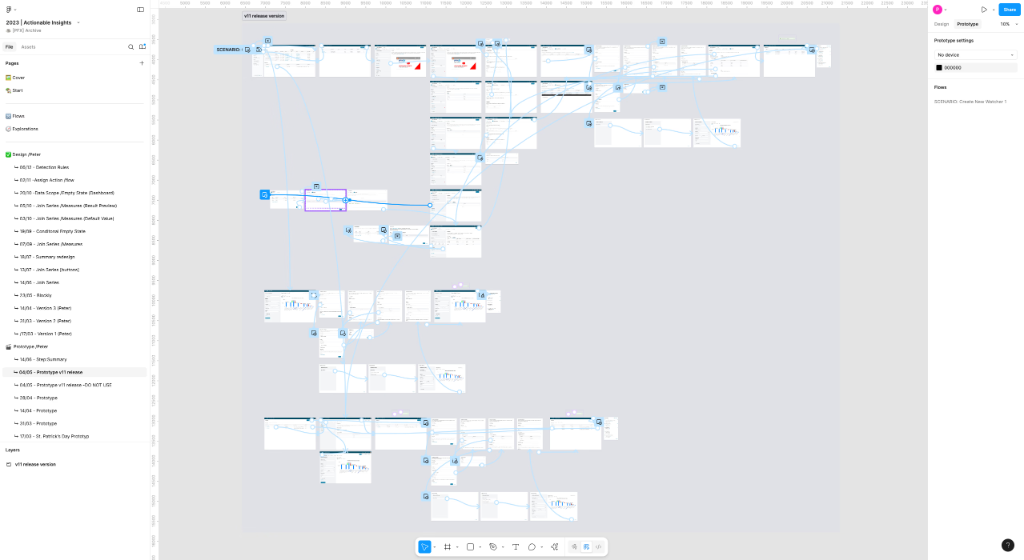
- Designed reusable building blocks (Queries, Portlets, Dashboards) so the system could scale.
3. Testing & Iteration
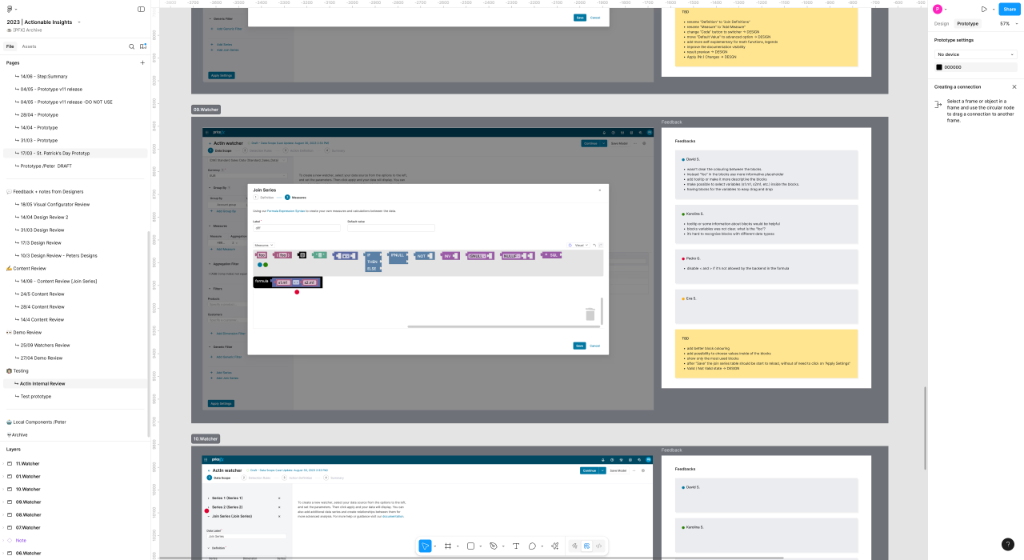
- Ran prototype tests with both technical and non-technical roles.
- Key insight: users preferred guided flows (step-by-step setup) over large configuration panels.
- Simplified terminology and added inline microcopy for clarity.
Solution
The final design has three core elements that close the loop from insight to action:
Watchers
Define detection rules through a no-code builder.
Actions
Triggered alerts guide users toward recommended next steps.
Action Plans
Bundle multiple actions into reusable playbooks for consistency and scale.
Outcomes & Impact
Reflection & Next Steps
- What I learned: Early user testing highlighted the importance of guided flows and microcopy to reduce cognitive load.
- Challenges: Balancing power user flexibility with non-technical user simplicity required careful iteration.
- Next opportunity: Explore AI-driven "suggested alerts" to further accelerate setup and adoption.
My Role
As Lead Designer I owned the UX and interaction design from research to delivery. I worked with PMs, engineers, and customer success on requirements, and produced the flows, prototypes, and final UI in Figma.